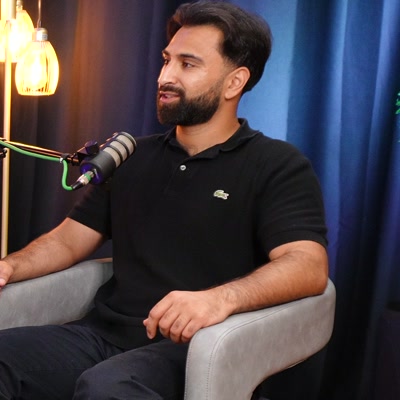
Saarim Asady
Natu, you played varsity football in high school. You played university football, and then you went, had a computer science degree, and then you went into entrepreneurship. How does someone have this winning mindset from ninth grade until now? I don't know if it's a winning mindset or a just not lose mindset. It's more of just like just not lose as opposed to win, because I'm not really trying to sometimes, unfortunately, not really is about, it's about winning. This is about fighting not to lose, and then by default you win. So it's more about trying not to lose, and then by default you win. Yeah, yeah. Look, I love your mother. Your mother has played a tremendous role in your life. She essentially played the role of both parents. Yeah. Tell me about that. Tell me about your relationship with your mom.
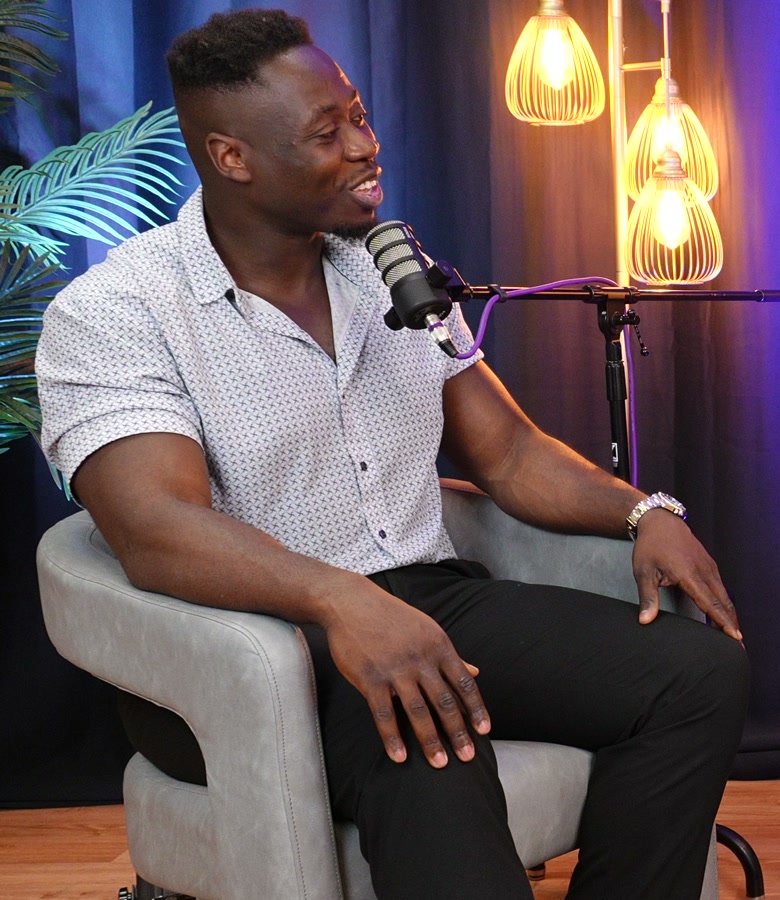
Natu Myers
Yeah, well, I mean, look, like my mom was somebody who took on a lot of responsibility, you know, in the house. So she was young, she came here, and, you know, she had to work her way up, you know, her like she didn't have a silver spoon in her mouth or anything. She wasn't given anything by anybody, so she had to fight for everything that she ever got, you know. So she came here, she had to fight for everything she got, and, uh, at the end of the day, you know, she worked her way up because she wants to actually like, you know, help people in the line of work she does.
Saarim Asady
So, okay, tell me more about this, though, right? Like, because for me, it's inspiring. Yeah, right. Well, I'll be very honest, like, I am genuinely equally as inspired as my from your mother as I am by you, right? Your mother came to Canada, yeah, and she worked for the government, yeah, right? She worked her way up in the government, yeah. She raised you, she put you in football, she got you to Queen's University, she helped you with all of this practically with no help, yeah. So tell me about your mother's journey and how you two built this together, because when I look at you, and also you're not that far an age apart, right? She had you at a very young age, yeah. Talk to me about how young she had you, talk to me about her career and also building you up at the same time. Well, I'll do you one further. I think it started, the story definitely started before her.
Natu Myers
Okay, like, I think there's a family legacy of education, hard work, things like that in your family. Oh, yeah, like, I mean, they told my grandmother's mother told her that, hey, if you don't study this, if you don't study well, I'm going to bust open your head and shove a bunch of textbooks inside, because if you don't study you're going to end up marrying like a poor, uh.
Saarim Asady
A poor farmer or something, so they guilted her, and then this type of thing goes down by generations. But to answer your question...
Natu Myers
Yeah, I mean, look, she, it was about necessity. It was about responsibility. And I saw that, hey, this woman suffered to get me into this university. I have to make the most out of it. I have to spend every waking moment, like, either in the gym and football or at studying. So I had to. So then after I graduated, I'm like, okay, every waking moment I have to spend, it's, you know, using, like, I was just, this is gratitude for all the things I got. So I had to use that to, you know, push myself to squeeze that lemon dry, basically. I had to use the gratitude to squeeze everything I could out of it. And when you were at your low points, right? I remember once you told me you were laying in bed in fetal position because Facebook ads weren't working for you. Oh, literally. Yeah, on the ground, on the bed. To your mother about this, what was your mother telling you at this point? Well, I mean, look, she was simply like, because my mentor at the time was keep on, like, I guess my mentor is like my mentor's employee was like, yeah, just keep on putting money into ads, putting money into ads. But it's like the ads didn't work. So, so my mom's just like, you know, you can always turn off the ads. And it was like, what do you mean? And then she's like, you know, you can just click the off button and stop paying them for ads and then figure it out later. But I'm like, if I do that, I'm a failure. Probably like, well, what does that mean? It's like, you can just turn them back on later. So it's like she really protected your mental health, your mind. Oh, 100, 100. So, you know, it was just me in the early days. This was like, what, like seven years ago, when I was six years ago, when I was just starting, and I was just like trying to understand how that game works.
Saarim Asady
Yeah, so tell me about your, tell me a little bit about your childhood as well. Like, did you grow up in a big house? Did you grow up in an apartment? Like, what was it like? Was it just you and your granny and your mom? Like, I just, what were the dynamics like back then? Yeah, just like a dumpy, like, apartment down in, down in Ottawa.
Natu Myers
Like nothing crazy, nothing to write home about. And then, you know, going from there, you know, a lot of it was day to day, just going to school, coming back. And then eventually, the, here's the, here's the, here's the trigger, the thing that changed my life. I was going to a middle school, and this is where, you know, mutual contact we know used to go there with me. We were, I went to a middle school, and then horror stories coming out this middle school, you know, people doing drugs, all this nonsense, right? So my mother wrote a letter to one of the best high schools in Ottawa to say, 'Hey, let me get this kid to this high school. I'm scared of that high school. He has to go to this high school.' And then that, since then, everything changed. You know, I got into, you know, football right away, first year in grade nine. You know, my grades were up, everything was up. And my grades were up before, but it was just more like, you know, they're prepping for university. And then university ended up being way easier, you know, because it gave me an opportunity and exposure. So that single decision by your mother to write a letter to the principal to get you into that other high school, yeah, changed the trajectory of your life. Yeah, because they wouldn't even allow you to go into a high school based on where you lived. And we lived in an okay area. It wasn't ghetto by any means, but it wasn't anything you write home about either. So that changed my life. That was the single best decision that she ever made in my life.
Saarim Asady
That's amazing. I didn't know that, actually. I'm telling you right now. Yeah, yeah, that's, that's incredible. Yeah. Okay, so let's talk about a little bit later in life then, right? Yeah, I remember, I know you don't remember this, but I remember this. I remember seeing you for the first time, Queen's University. We're 18 years old, and I see this humongous guy, just gold heart, just walking around the university residence, Leonard Hall. You were balancing varsity football at the university level. You were studying computer science. How did you balance these two, and how did these two lead to what you're doing now with Raises.com?
Natu Myers
Well, I'm not sure if I balanced it with any ease or anything. It was just literally, I would wake up, and then we would.
Saarim Asady
Go and eat, and then we'll go to class. We'll go to practice, and then I'll stay in a library until 2 a.m. And then just repeat that like every day, at least during the season, during the on-season. So how did
Natu Myers
How did that happen? Well, I mean, it started from, yeah.
Saarim Asady
I mean, I just like, I didn't really think about what I wanted to do. I was like, let me just like get a degree, get a job later. You were like, first winning the day. Yeah, just winning the day, day by day.
Natu Myers
But there's always a turning point, though. The turning point happened when I got a shoulder injury. That was when my life changed again, because when I got that shoulder injury, then I'm just like, you know, then I look at it differently. I'm just like, yeah, you know, like, do I want to do this? Like, do I want, especially in Canada, it's not like America where you get millions. And even if I got millions, do I want to put my life on the line and my body on the line? Yeah, my brain on the line. Fortunately, like, barely any, like, you know, head trauma, anything. But I think the key was when I was in an off-season and my shoulder was recovering from surgery, I started being like, oh, what else can I do on this campus? I started hanging out with the commerce kids. And then I started going to the Queen's Business and Technology Conference. That's the first conference that got me into business. And then I started loving, and I'm like, this computer science thing is kind of, it's kind of, they don't fund it. It's kind of, the office is dirty. But the Queen's Commerce kids, they have the suits. I like wearing the suits. They have the suits. They like talking about like all these things in venture capital. And then I went down the rabbit hole, super deep down the rabbit hole. And then everything has been about like raising money, venture capital, business, you know, a little bit of tech. And I'm like, then that put me on a different path completely. Dude, that's amazing. Yeah, that is absolutely amazing. I didn't know, dude. I'm learning more about, oh, yeah, right now, hearing all this. Yeah.
Saarim Asady
Okay. Okay, let's talk about you.
Natu Myers
Graduated university, yeah, right? You graduated, you got your comp sci degree. You were done with football at this point. You get your first job.
Saarim Asady
Talk to me about how what your first job was like and how you transitioned out of that first job because you didn't stay in that job for long, right? It was six months, six, eight months, whatever. Okay, so you went six months in a job and then immediately jumped into entrepreneurship. Yeah, tell me that story. Yeah.
Natu Myers
See that one, okay. And I still remember, I remember one time I'm looking at the logo of the company, which I would, which wouldn't be named. And then I was sitting down, and then I remember you called me and you're like, 'You ever consider doing this business a full time?'
Saarim Asady
Because I was doing like a blog on the side or whatever, but I didn't know what I was doing. We're all just watching Gary V and we're all just like making blogs and we don't know why we're making blogs. We're just, everyone made blogs. But anyways, so, and I still lost that domain. But anyways, so.
Natu Myers
It was like I was just coding, and it felt kind of, like slave driver-ish. It was just like slave driver-ish. And it was like, yeah, like, you know, you have to produce this. It was just like production, it was about production. And I just felt like, you know, this like pressure to perform, you know? And then I'm like, 'Eh, it's...' So, let me tell you what got me. It was artificial competition. So, basically, they'll try to, they'll put you in a group, and then they'll try to make sure, they'll try to see who can do much more work, more work than the other. And then they'll try to make this one jealous of this one, and this one show, 'Oh, good work,' to this one. I'm like, 'Why am I playing this game, you know?' So, I just like, I actually quit. I actually gave him a resignation because it was just too much. And it's like, I could have like still, I could have still, they didn't really scare me. I could have still stayed there, but I'm like, 'Yeah, I don't want to, I don't want to play this game anymore.' I'm like, 'I'm not, I don't have a family.' And I started to get actually anxiety and actual stress. And plus, I actually started to get a little bit chubby too for the first time. Like, not like chubby, but like, you could see the NPC getting inside. Yeah, yeah, yeah. And then, you know.
Saarim Asady
I'm just like, why am I doing this? Yeah, yeah, yeah. Okay, so tell me about the early days of Raises.com, because I remember it was not called Raises.com. You had some Greek name, like Aeropolis or something like that. So tell me about, tell me about, first of all, I want to know the domain story. How did you get Raises.com?
Natu Myers
Yeah, so yeah, so I was sitting in my grandmother's run day, right? And then this is right after COVID, so 2021 summer. And this is like right during the whole George Floyd thing. Everyone's just distracted, all this stuff, but I'm just doing business, right? And then I go to this website, Sedu.com, and my mentor is like always saying, 'Yeah, look at domains.' So I've been thinking about this for like a year or two years, but then I just find this domain, Raises.com. And I mean, the price, like, I don't think I'm going to drop the price, but like, it was really affordable. And then I saw it, and then he had it listed for like a certain price that was like, I could afford it, but it was higher than I thought. And I just came from like working from another consulting gig, and so I had some liquidity to pay for it. But then I negotiated. I said, 'I'll buy it today if it was a lower price. If it was this price, I'll buy it today.' And he actually agreed. I'm like, 'This guy must be desperate.' And then we just did it. And then
Saarim Asady
You got the domain. Yeah, yeah. Because like the company's about raising money, and then also the domain is like about raising, is raising. So I'm like, how lucky am I for like to get a six-letter domain in the same thing? That's unbelievable. Yeah, dude, getting a six-letter domain, like, people don't understand the gravity of that. Yeah, that is like a once-in-a-lifetime shot. Yeah.
Natu Myers
That's how I felt about it, and I think.
Saarim Asady
Things inflated, hey? Since that's 2021, so now it's even worse asset. It's crazy. Yeah, like the domain itself might be your biggest asset. How crazy is that? That's so funny. That's unbelievable. Okay, so let's keep going here. I'm gonna ask you some. I'm loving this, by the way. Tell me this, man, in simple English: what is Raises.com? We are consultants that help people raise money to buy businesses, buy businesses and assets. Okay, so give me a situation, give me a situation where I could work with you. So for example, like if I wanted to buy $20 million worth of land in rural Texas, is that what you could help me do if I don't have the capital to get that? Like, give me an example where Raises.com would come in and be able to add assistance, right? So I mean, you had a blog, so if you want to buy a blog, we can help you raise the money to buy a blog. Okay, so is it just digital assets? Could be anything that makes money. The assets have to make money. I actually don't like development as much. We can't, we push back on developments and on. Interesting. Yeah, we don't like because it doesn't make money, and then, you know, you have to go and do this. Okay, so you can help people, sorry to cut you off. You're good. So you can help, so Raises.com helps people gain capital, get capital to buy cash-producing assets. Yeah, it's an amazing business, man. Yeah, okay, yeah, great. Okay, so tell me about a time, tell me about a time personally where, when you were working in Raises, where you really felt like, 'Okay, we're building something of real value here.' There are different times. Tell me one, but tell me one that sticks.
Natu Myers
Out. Yeah, no, I think it's definitely like, well, I mean, heck, probably just two weeks ago, we flew down and saw like a client, you know, that raised 3.4 million dollars. And then, you know, shook his hand, you know, met him for the first time. I didn't, I wasn't on the onboarding or sales call. I wasn't on the support side. The system just took care of him, and then I came in just after it closed to say congratulations. That was the first time I spoke to him.
Saarim Asady
To tell him congratulations, and that's how it should be done, right?
Natu Myers
If there was an issue, it got escalated to the guy who he first spoke to. So that's how it should be done, and that's what that, that was when I think that we, this is the beginning of a higher level.
Saarim Asady
Okay, so tell me this then. The future, well, the future of AI is changing everything for all of us. Yeah, right? Yeah. How does the future of AI affect Raises.com and what you're doing?
Natu Myers
Well, I mean, it made our job way easier in one way. In one way, it made it way easier because, I mean, the amount of paperwork that has to be done to raise money and legit, like, there's a ton of paperwork, tons of financial documents, all this stuff, right? If someone wants to lend you money, right, to buy just a small house, imagine all the paperwork. Imagine if you want to buy a big business. So it's a ton of work, a ton of paperwork. So the AI can go in and it can draft things, and we have to approve because a human being still has to approve because sometimes it can hallucinate. So it made that way easier. In terms of what people are doing, I mean, I see, I don't know, like, we deal with a lot of like older, more like older people who are less tech savvy. So I see...
Saarim Asady
People that use it. And then I can tell that they're using it because the sentence structure looks ridiculous. Yeah, you know, or you know, nothing really changes that much because like people like want to shake a hand. When you're raising millions of dollars, you want to shake a human being's hand, at least for now. Yeah, so okay, no, that's awesome. So tell me this, what is what's your vision for the next five years? Yeah.
Natu Myers
My vision. So we want to, so here's the thing. When I was, bear with me, when I was in university, and then I was learning about raising money and in business and stuff, back in the day, people would sell us this lie where you have to, you just have an idea, and then you go and then you raise money for an idea and things, right? So the purpose of the purpose of the company is really to help people raise money to buy things that actually make sense and raise money in a way that makes sense. Show people the truth in it without the hype, in ways that actually get done. People can actually raise money predictably.
Saarim Asady
Got it. So not some like fake app, or like some app that has a million users but hasn't generated a dollar. Yeah, you're trying to help people actually buy things, raise capital so that they can actually create a cash producing asset. Yeah, I'm not going to sell 99 people a lie in the hopes of getting one person a successful deal.
Natu Myers
I want to just have each deal be like good to work with. So the goal in the next five years, yeah, just build up the team. You know, building out the team takes a lot of money, and it takes a lot of it takes a lot of deals getting done. So that's my motivation is to build out a team of of of killers, of some of the smartest people, some of the smartest people I can find, you know, some of the smartest, most ambitious young people that are willing to do deals, support people. That's what I'm looking to do the next five years, because then business will just take care of itself.
Saarim Asady
Love that. All right, let's take a little personal right now. Yeah, who is Natu Myers today, 32 years old?
Natu Myers
I want to know, who are you? Who am I for the people who don't know you? Who is Natu Myers today? Who am I? Well, I mean, look, like I'm a guy that I go to the gym a lot. I love my business. I love going to the gym. You know, I have a simple life. I live a very simple life. You know, I don't really do anything fancy or anything. I just I'm a very simple guy, so.
Saarim Asady
With your life, what do you like? What do you, who do you like outside of business? Yeah, I mean, look, I'm a really boring guy. You know, I just I wake up, I hit the gym, I focus on the business. I I
Natu Myers
I spend a lot of time with my family. You know, I guess one thing that you would say is like I spend an exorbitant amount of time in the actual, I just love fitness. I'm super deep into that. I think it's from the football days. But yeah, no, I like to keep things simple, keep things good. You know, I don't really do anything too crazy in terms of, you know, I'm not really super ultra adventurous, but you know, I just like keeping it.
Saarim Asady
Do you like to buy nice things? Honestly, not really. I like to, I like using good products because it shows me what's like how to build a good business. But I like, I just like going to the gym, man, like a ton. That's your, that's your happiness. I call it gym tourism. So whenever I travel, what I do is that I base my traveling based on the gyms I go to. Yeah, so I went to Houston to, you know, shake hands with that one of the clients. I went to this gym called Roman Empire Gym, 30,000 square foot facility.
Natu Myers
So it's the best gym I've been to so far. So I just like going to different gyms, working out, and, you know, just that's pretty much it. That's awesome, man. I love that. I love that. Okay, I want to take it back for a second as well.
Saarim Asady
Played football essentially at the highest level up until university, right? Well, second highest level. Like, I didn't play like pro. Okay, well, let's say this. Okay, you played football at a very high level. Now, you told me that you had a lot of coaches along the way who were really like father figures to you. Oh, yeah. What are some lessons you took from football that you now apply to business today? Oh, so many. Like, that can be a whole podcast. Hey, like, so many, man. So, see, like, sometimes.
Natu Myers
Like, offline, we, I have these little quips that I say to you, these little quotes, quotables. But ultimately, here's the main thing. And I guess I doubt that you watch it, but that is coach called Coach Pat Sheahan. And what he did is like when he recruited me to that, to that football, because like it opened up my opportunity. I went to different universities. I went to, you know, in BC, I went everywhere, you know, all around Can, even in America, there are a few. But the difference with this coach is that he didn't care about just winning. It was about how you win. You know, he cared about not just winning a bunch of games or getting a guy to win a bunch of games. It was like he cared about the character behind the guy that you would win. Because there's one thing to win a bunch of games and then drink and just win a bunch of games and get the prize and then go home. But it's another thing to win and then also have a certain level of character and standards about how you do it. And so he taught me that it's not just about winning, it's about how you win.
Saarim Asady
And how you win is just as important. And how does that relate to business now? Well, I mean,
Natu Myers
Look, I look left and right. I know people that charge people 200K, 100K to raise money, and then purposely, they purposely do that knowing that they don't want to help them raise money. Like, I know these companies that do that. I've seen like, you know, class action lawsuits. I've seen people, you know, ex-FBI people chase people and get them in prison because of people that, you know, are super fraudulent in this business, right? So, it's not just about making money here. It's about making money to build something that's good, right? That's super high quality. So, that's the goal.
Saarim Asady
It's about how you win. Tell me with the coach then. Start with the coach. Okay, so tell me, okay, here we go. Tell me something you learned from your competitive football days that you apply to business now?
Natu Myers
Yeah, so I had this coach, right? The head coach. And he taught me that it's not just about winning, it's about how you win. And the way that I'm applying this in business, I mean, we just want to, we don't want to, we don't want to just make money or raise money for clients, even. It's about how we do it, and we want to do it with excellence and a certain standard. So,
Saarim Asady
You maintain that standard in everything you do. Yeah, yeah. It's all about, it's all about how you do it. Tell me about another coach, someone particular who really had a monumental shift in your life.
Natu Myers
Monumental impact, sorry. I had a few of them. I had a few of them, you know. I had some that actually, you know, it's funny, I had some that were actually on the negative side, not a positive side.
Saarim Asady
Tell me about it. So, you know, you know.
Natu Myers
I had one that would motivate through fear, and another one I'll motivate with, with, uh, in a balanced and more balanced way. So, the fear, it was always like, 'Oh, you didn't do this, you're not enough, you didn't do that.' And then, you, the, the positive, sometimes he would scream at you. And then, like, for example, the main coach, one time I was walking on the field. I was really, I was kind of, I played, he was making me play a position I didn't really like. And then I, you could see it in my body, you could see it in how I was moving around. And then he, he just took me to the side, and then he screamed super loud. He's like, 'Natu, do not ever walk like that on my field ever again!' And it was really interesting because it was not, it was like I was doing what he said, but it's because how I was doing it was, was like as if it didn't care. And so that taught me a really important lesson that you can tell if somebody is a winner, if they want to win, based on how they act. And it's not something that they do, even like the response time on, on the messages and like in your employees and WhatsApp, whatever. It's like response times, it's like how they talk, the passion. So that's even more important than even some of the, the skills. And that taught me a huge lesson. But, but ultimately, when I have people I work with, the employees, contractors, so on, I don't want to motivate just through fear alone. I have to have a balanced sense of like, you know, when to use a, you know, carrots and when to use...
Saarim Asady
Stick and you have to balance everything out, yin and yang. So that's why I learned, you know, from that coach dynamic. That's awesome, man. Yeah, tell me a quote because
Natu Myers
I know your football coaches are all about quotes. You always quote your football coaches. Tell me a quote.
Saarim Asady
Something a coach said to you in football, yeah, that just stuck with you to this day.
Natu Myers
One is, it's 'haul some ass, haul, haul, haul ass.' Yeah, you'd be like, 'haul ass up field.' But I mean, that's arbitrary. But it's like, 'fear makes cowards of us all.' Yeah. How do you apply that now into business and what you're doing now? Because usually, it's crazy. Usually, whenever I'm, you know, like, let's say there's a big purchase or there's a big decision, usually those are the times where I have the biggest improvement in my business. And then that's when I actually hesitate to put off a decision, and I can see myself being a coward because I'm scared. So it's like, I have to just, you have to just, have you man up? Just man up. Yeah.
Saarim Asady
And then just do it. Man up. So tell me a time then in business or life where you were scared, but you just manned up and you pulled the trigger. Yeah.
Natu Myers
I mean, it's not easy. Like, they're different things. Like, it's not really easy to listen sometimes. Like, there's a hard... sometimes your business changes direction and grows in a certain way, and sometimes you have to lay somebody off, and it's really hard, especially when you have an emotional connection with them. But yeah, like, it was really bad. Like, I would have nightmares about this and think about it, and then eventually I had to make the decision, but it was what was best, and you know.
Saarim Asady
And then you just do it in a respectful way. And it's a hard thing. It's a really hard thing, but you got to do it. Sometimes you have to do it, sadly. Okay, I'm going to get more specific on business here. Go ahead. Yeah, can somebody post their deals publicly on social media? Is that an acceptable thing to do?
Natu Myers
Kind of. It's sketchy. Like, you can legit... so here's the thing about this business. Hey, you can legit get yourself... somebody can legit get themselves, you know, fined, sued, if they do it wrong. But basically no. Basically, it's best if you don't. Like, especially if you're only supposed to sell things to very rich people, so you're not allowed to sell publicly because then if a poor person invests and they lose all their money, that's bad. So that's why there are all these rules. So basically, usually no. And usually you're not supposed to just go on LinkedIn and say, 'Oh, here's a wire link,' or whatever, you know, or, 'Hey.' It's kind of like the way that, you know, you have leads, you book a call, you get a lead. You can have the same thing if you're raising money. You can get a lead, you know, you can have a lead. 'I want to raise money.' Okay, but then don't just say everything because somebody may read that and then they may not be qualified, and then you can get yourself in trouble. Got it.
Saarim Asady
Yeah, got it. Okay, no, that's really valuable. Yeah, let's... I'm going to ask you some more here. Yeah. Okay, who are the investors on your side? Where do they come from? Well, I mean, usually, honestly, you know, it's funny. It's just like, so obviously there's online. You're just Googling online, and you know, and so on. And then sometimes that works. And then another time it's like, you know, somebody who knows somebody. The way that we did it, we started just finding a bunch of brokers, and the brokers knew people who knew people, and then you just basically went down a bunch of rabbit holes. You develop relationships with these people.
Natu Myers
Yeah, but sadly sometimes the rabbit holes, they lead nowhere, and sometimes they're actually... it's real. So it's the one way I've known to see the direction you go into. It's usually talk to the people that are successful, usually because usually the success comes from a closed deal or from money. And then you just go towards the more success and you stay away from the less success, and then eventually there you go. Yeah, intro to an intro, and then eventually that's it. That's awesome, man. Good, good, good, good, good. Okay, I like that your answers are getting really crispy.
Saarim Asady
Okay, if two of your clients are chasing a deal, okay, if two of your clients are chasing similar deals, who gets to the investor first?
Natu Myers
Chasing similar deals. So, I mean, if you beef by chasing, you mean they both want to raise money to buy like the same business? Same business. Honestly, the best client wins. Honestly, it's fair game. But the issue is that the seller, the person who's raising money in the seller, like they say it's kind of first come, first serve. It's like the first person says, 'Oh, you're not allowed to talk to anybody else around this deal.' So usually that's how it gets taken care of because it's not like you don't want to make it so that it's unfair. So you want people have to respect the first person.
Saarim Asady
That it's like a, it's like a rule. It's like a broke, it's like bro code, but for raising money. Yeah, yeah, yeah. That's awesome, man. Okay, I like that. Let me see. I'm gonna ask you what time, how long does it take to raise money from the day they decide they want to raise money to the moment it's actually in their bank account? Like seven months. That's it. Pretty solid answer.
Natu Myers
Okay, yeah, yeah, seven months. Yeah, I mean, I mean, look, I know a guy who, this is a guy, me, my mutual friend's mentor. He does like, what, millions in deals and commission, all that. He said the same thing. I know some people I do some.
Saarim Asady
Same thing, even.
Natu Myers
If it's shorter, I don't like to say that. It takes some time here. It's a lot of work here. So if you want to raise millions of dollars, put it in your bank account and buy businesses, it's not something that would take overnight. So
Saarim Asady
Six months over, and then you will get it done if you follow the stuff. Okay, yeah. I like this, bro. This is a good one. So here we go. So, who owns the relationship between the investor and you? Okay, so who owns the really... Okay, so okay, I got it. So how does the relationship work with the investor after the deal is completed? So let's say you're working with someone, you connect them with the investor, and now they want to go for a second deal. Does that still go through you, or do they go directly to the investor now? Oh, that's such a good question.
Natu Myers
Like, yeah, I mean, it still goes through because the thing is, right? Like, sometimes, like, we have a broker that we work with, and then they want to get their money to... Basically, it's covered. All broker, everyone's protected, so it's fine. Everyone's protected. The only thing is that may have to
Saarim Asady
The only thing is, just look at me when you talk. Yeah, right. The only thing is that sometimes people forget, and then they come back like a few months later after the agreement expires. Sometimes that happens. Got it. Yeah, but usually it's good. Usually it's covered. Okay, yeah. Usually you're good. Gotcha, gotcha. Okay, what would you say to the person right now who's broke, in a bad place, but they have this idea and they want to raise capital? What's your advice to them? Broke, in a bad place, so they want to raise capital to run a business? Yeah.
Natu Myers
I mean, look, like, decide whether you actually want to do this or not. Like, to actually decide if you want to do this, it's actually not easy. It's very difficult to raise money. Like, I'm not going to sugarcoat it. So if you're broke, maybe make money first, or find people to have money. Because if you're broke, the only way to, in my experience, like, to actually raise money in an easy way is like, know people that have money, and then use their businesses to get like a loan, or get money from their businesses to be able to raise money to buy your thing. That's how we did a deal once. So if you have no money, people are not going to send you money for no reason. So just know rich people. And honestly, you may want to just start a business first for a bit, and
Saarim Asady
Then once you're stable and then maybe come raise money. Gotcha. Okay, look, I want to get a little personal here. I think we've got a lot of business questions here. So, you know, like I said, I I love your family. They've been like they've been so great. And I, you know, we have like we literally have a group chat with your mom and your granny. Yeah, yeah, yeah. We haven't talked about your granny a lot. Oh, so I want to talk about your granny. Tell me about your relationship with your granny growing up. What was it like? What's it like now? You know, you and her are really close. You take her to the gym. Yeah, yeah. Oh, yeah. Tell me all about that. Well, I mean, this is cliche, and I think people like cliche. So, the first time I saw my grandmother.
Natu Myers
Uh, I cried. Why? When I was, you know what, I don't know. I think I just was happy. I was like 12 years old or something. And uh, you know, because, you know what's weird, it's like I was big, my mother was big, and then I thought my grandmother would be like biggest. But she was this tiny lady, this tiny, frail lady from Africa. So, it looks kind of, they also look kind of like pathetic in a way, but in another way, it's kind of like she's cute. So, I don't know. But then there was that. But no, like my grandmother is like another mother to me. Like she's uh, yeah, no, she she's like another mother. She taught me another side of life that I appreciate. She taught me another side of life. She she taught me like she teaches me too. Like she's very like disciplined. You know, I make jokes about like crack jokes about, you know, OCD and how extreme, but she taught me how to be disciplined and in control and.
Saarim Asady
And she's a woman of faith, you know, super God-believing Christian, goes hard.
Natu Myers
And she always supported me in every decision I ever made. Through every hard thing I've ever gone through, she has 100 supported me. She's gone through some like uh, some health difficulties that she recovered from. And she, the way that she was courageous about that moment, about like, you know, her her issue, and then how she got better, even the nurses were impressed. The nurses were crying, saying, 'Hey, this is a miracle, whatever,' because she had the amount of, so look, a doctor literally said that, 'Look, uh, X amount of people survive this thing, this surgery.' And then she's like, 'Yeah, I'm gonna, you're gonna be fine. I'm gonna see your uh,' she's talking to my mother, 'I'm gonna see your uh, my mother's birthday was coming to you. I'm not too, I'm gonna see your marriage one day. Like, we're good.' She she was more, she was super confident, and that just told me the power of having faith and having like boldness. So, yeah, no, that woman is something else.
Saarim Asady
Yeah. Wow. Yeah, so let's talk about this, man. Like, you know, your
Natu Myers
Grandmother had a really big health scare, yeah, recently. Yeah, how did that affect you? It stressed me out. So, you know, it's funny, it's like it was, it taught me. So, I think one of the biggest things in my life is gratitude. Gratitude is probably the ultimate like value that I have because it taught me to be grateful. Because even when she was, she was recovering, and then she could barely talk, and then she had all this stuff in her face and whatever. And then me, I was, 'Oh, I'm happy she's alive,' you know? I was like, you know, it's like, 'Oh, they had to put this stuff here, this.' I was happy she's like, 'Oh, she's walking. I'm happy she's walking. Oh, I'm happy she's running.'
Saarim Asady
You've been pretty heavy involved in her process of recovery, right? You've been taking her to the gym, you've been working, like, you've been spending time with her. Talk to me about how that's like inspired you, or what you, like, what you've gotten from that, the whole situation.
Natu Myers
Yeah, well, I mean, I see, like, it was, it was kind of weird. It's kind of eerie because I remember, it's funny, because like I would work out her like neck a lot, and then I'll work out her like legs, her standing up motion. Because, I mean, these are the motions that give long longevity because you have to be able to like stand up from the bed, you have to be able to. And what's funny is that those are the parts of her body that she needed the most when she needed the most. But now we go to the gym and we walk in here and there, not as intensely now, because like I'm like, I could push her 100. Sometimes she goes to the gym like almost the same. But it's basically when you work out, when you go to the gym, it's not to build muscle and to look like Chris Bumstead. It's so that when you're like in your late 80s, mid 80s, you have self-dignity, like she's able to do everything.
Saarim Asady
So it's like you have to have self-dignity when you're old, and you want to increase that chance as much as you can. Yeah. Okay, let's talk about your faith. Yeah, you're a Christian. Yeah, faith is a huge part of your life. It's pretty big, yeah, I would say. No, you, you know, you've been in Bible studies, yeah, you go to church regularly, yeah. Faith, talk to me about how your relationship with faith and business have come together over the years. You know, this is an interesting take that you probably wouldn't expect, but I think I think there are different ways I can.
Natu Myers
But I think because I was raised as an only child, my coach used to tell me that I used to march by the beat of my own drum. Because the thing is, like, because I remember when I first met you, you know, you guys, 'Hey, you're going out, you're doing this.' I'd be like, 'Nah, you're doing this now.' And there's nothing wrong with going out and drinking or whatever, but I wasn't really into it because I'm like, 'Eh, like what good can come out of it?' Like, I have to study, and it's like, I have to study. It's just going to be like, you know. Because the thing is, it's like, you know, they push like, 'Oh, hey, you know, don't go out with girls and all this' in Christianity. So, you know, I kind of like withdrew myself from as much as I could from those things. And then it was really odd because it.
Saarim Asady
Was like being like almost like a closeted Christian, right? It was almost like this thing. But then...
Natu Myers
Long story short, it taught me how to be very contrarian and independent as a thinker because I would make decisions that most people don't make, which usually seem really bizarre and strange. But I think through business, it's kind of served as like, so in the past, it served as like insurance as, oh, if this thing, if everything goes down the toilet...
Saarim Asady
You know, hey, God is my insurance policy so that, you know, hey, you know, like there's more to life than just money, you know. But now it's like more like...
Natu Myers
Instead of me doing it as a from a source of fear, kind of like that first coach, the bad coach about fear, now it's more like, okay, I want to do it from a source of like motivation. Like I want to do something good. So now it's been shifting more to like, let me do something good because of my faith as opposed to let me be okay when shit hits the fan. So...
Saarim Asady
That's kind of the shift I'm starting to try to make now, you know. You what, what?
Natu Myers
What role did your mother play in bringing, introducing faith to your life? Well, I mean, it was pretty, pretty like candid. Like, I don't have any crazy testimony or anything where it's like, oh, you know, I was like abandoned on the ship or a pirate ship, right? Like, just raised in that church, you know. Yeah, we just, it was just introduced. It was expected. It was introduced. But then I think when, yeah, it's around, everything happens around 12. When I was 12, then I really started to... It's funny, I actually went, I actually used to be a rapper. Like, I used to do rap. So, because I was telling the management of the studio, it's like, like I recognized a condenser mic. And so, I used to do putting a Christian rap, of all things, Christian rap. Yeah. So, because I mean, like, instead of rapping about, about like, you know, hoes and guns and all this, it's like, okay, let's rap about God. So, like, I used to like look up to rappers. Like, there was one guy, Young Samach, some small guy. Through him, a lot of guys like Lecrae and all these big guys, before they were big, used to go to all their things. They used to be really hyped up. And so, that was how it like it grew later on. And then eventually, I fell in love with the business bug. And then that just kind of consumed me. Like, I still have faith and everything, but, you know, like, I wasn't really like, I'm not really able to do music and do all those things anymore. It's just mostly just the business and then working out. No, I love to learn about this. You know, it's incredible. You know, I, I think, I think the way you've gone about faith is actually very unique, right? You're not, you're not on this extreme side where it's just like, you know, disregard business life, gym, and just pray.
Saarim Asady
But you're also not on this hedonistic side of like money, money, money, money, money. It's like you found a way to incorporate both of them into your life harmoniously. Tell, speak to me about that specifically. Yeah, because I, like, offline, I sent you a big voice note.
Natu Myers
A while I was really thinking about this. Hey, because here's the issue. The issue is that a lot of talk about my issue. So, when people figure out why they do something, it's like how I spend the money on stuff and why I'm doing it will determine how we do it, right? So, I said, I want to hire some sick people, amazing people, and build something here, and then help raise money for a lot of people that cost millions of dollars to do, right? So, if we're making money, we're closing deals, we're charging clients, we're making money, we want to do it, and then it justifies the reason why we're doing it. But if it's just I make money and then I put all of it in my bank account and I go sleep, you know, then how am I supposed to use that as a reason to motivate clients? How am I going to use it to be single-minded when I'm selling clients or when our team is selling clients? It'll be kind of like dual-minded. Like, what's it called? It'll be misaligned. So, I'm like, okay, yeah, we justifiably have to charge and make a lot of money and raise a lot of money, and our things are expensive. But it's because we want to, because we're good. Like, if you want to, if you want something that's low quality, go somewhere else. But if you want to work with us, then it's expensive and it's going to be really high quality because we need to hire some really good people, and it's justifiably, we're going to be one of the best. So, that kind of rephrased it because now I'm building something that's expensive and good and justifiably so, you know what I mean? So, it's like a different, and we're doing it why? It's because we want to build something sick that helps people raise millions of dollars to build stuff, right? Okay.
Saarim Asady
So, it's like a different frame as opposed to just being, oh, let me put money in my bank account and go sleep. Yeah, you know, go like, you know, keep it for myself and then screw these clients. 100, 100. Okay, a couple last questions for you here. The same way I asked you about what's a lesson from football you take and you apply to your life now, what's a lesson from your faith that you keep in your mind at all times?
Natu Myers
I agree with one of my clients. He said, through Christ, all things are possible. So, what that teaches me is like, and it could be, it could be, you know, that's what I believe, but it could be whatever anyone believes. But like, I think you have to really see reality as like malleable, you know what I mean? Like, you can't just, because basically, you know, we're in the studio right now. We have a bunch of street signs around us and all this stuff. People sat in the room and then just invented all this stuff, you know? Like, you don't have to be, you don't think so rigid. So, that's one thing is just remembering anything is possible. And then knowing that you're doing it for x, over building something outside of yourself. So, if it's more than just you, it's funny, the more it's just you, then it's not enough. Because why would I want to raise, like, why would you need millions of dollars and billions of dollars if, because how much can you spend on one person? Yeah, you don't like to buy things. No, how much can you? But, and if you start thinking about your family, that's like step one, or your future family, that's step one, or even current family, that's step one. But you start thinking about other people's families of like employees and clients and stuff, then you need like billions of dollars. So, then that helps you make a bigger vision that other people's visions could be inside of. So, then that's kind of why, like, you know, this is basically outside of yourself. And then basically, you know, all things are possible. So, that's.
Saarim Asady
Awesome, man. No, I enjoyed every minute. I learned a lot from this, bro. Thank you.
Natu Myers
I learned a lot too, even just saying it, man.